
Bikefit Blog · 8 november 2024
Why is the sacrum so important for male and female riders? What is it and what is the function of the tailbone?
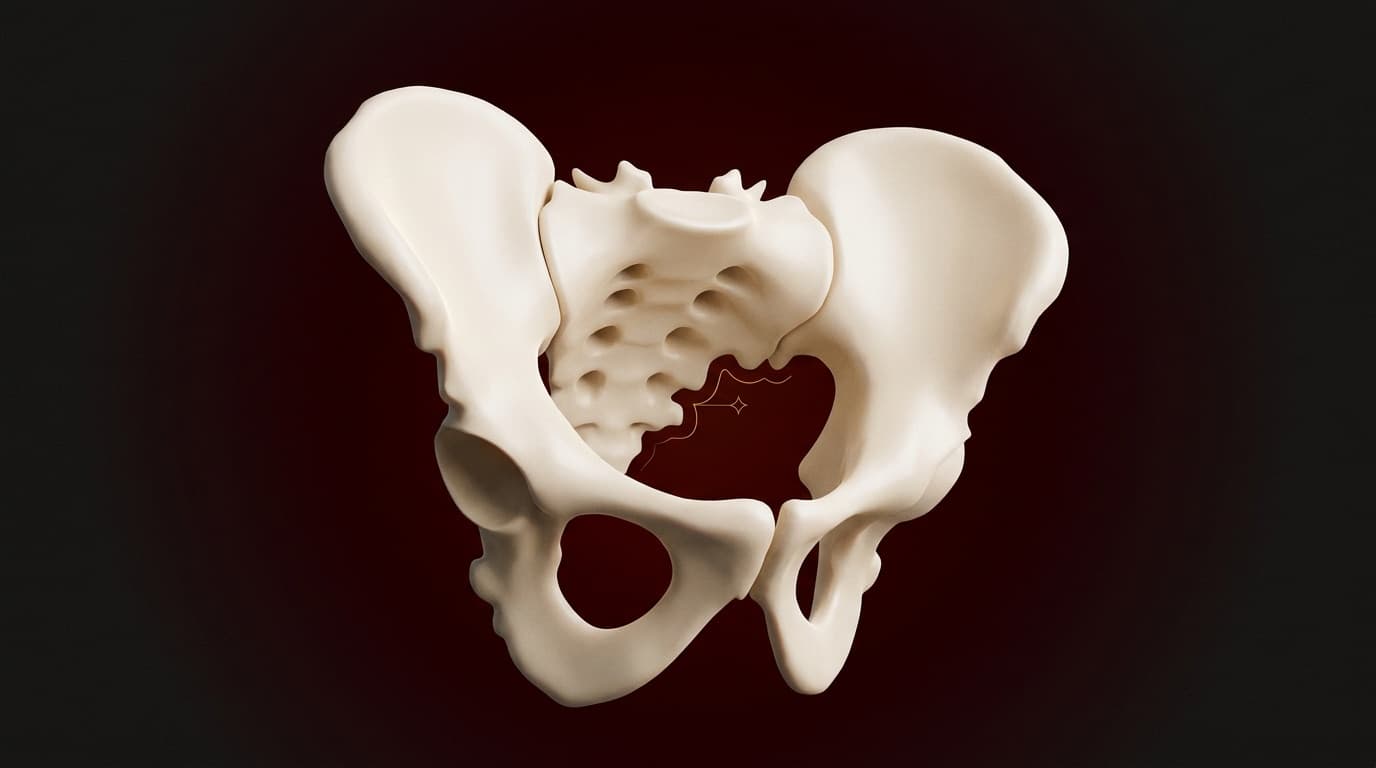
The sacrum is a triangular bone located between the two hip bones and forms the keystone of the posterior pelvic ring. It consists of five fused vertebrae (S1-S5) and has unique struc
The sacrum and the tailbone (the coccyx), often overlooked during bike fitting, play a crucial role in maintaining stability, distributing forces, and harmonizing the movements of the lower body with every pedal stroke. Let us explore the complex anatomy, biomechanics, and potential complications surrounding these structures and discover why they are so important for cyclists and how targeted interventions can help restore optimal function. Do you experience discomfort in the lower back or the hip and pelvic region? Then you would do well to read on!
Anatomy of the sacrum: the triangular foundation
The sacrum is a triangular bone located between the two hip bones and forms the keystone of the posterior pelvic ring. It consists of five fused vertebrae (S1-S5) and has unique structures that connect it to the lumbar spine at the top and the coccyx at the bottom. The sacrum operates along three primary axes:
• Transverse Axis (at the S2 level): This axis enables flexion and extension movements, important for forward and backward tilting of the pelvis during power transfer while cycling.
Transverse Axis (at the S2 level): This axis enables flexion and extension movements, important for forward and backward tilting of the pelvis during power transfer while cycling.
• Oblique Axes (left and right): These axes enable sacral rotations, essential for balancing asymmetrical forces during pedaling and for providing a counterbalance to dynamic pelvic movements.
Oblique Axes (left and right): These axes enable sacral rotations, essential for balancing asymmetrical forces during pedaling and for providing a counterbalance to dynamic pelvic movements.
• Longitudinal Axis: This axis runs from the promontory to the coccyx and enables subtle rotations and stability adjustments, which are essential for moving in the rhythm of the pedal stroke.
Longitudinal Axis: This axis runs from the promontory to the coccyx and enables subtle rotations and stability adjustments, which are essential for moving in the rhythm of the pedal stroke.
The design of the sacrum provides a stable yet flexible anchor that acts as the centre point of the body, absorbing and distributing the continuous forces generated during cycling.
Anatomy of the coccyx: the tail of stability
The coccyx, or tailbone, is a small triangular bone consisting of three to five fused vertebrae at the base of the sacrum. Although it may go unnoticed, the coccyx functions as a structural extension that anchors ligaments and muscles, such as the sacrococcygeal ligament and the gluteus maximus. These muscles not only support pelvic stability but also contribute to the posture and balance of the core during the cycling motion.
Biomechanics in motion: the role of the sacrum and the coccyx during cycling
During cycling, the sacrum and the coccyx work together to stabilize the pelvis and distribute the biomechanical forces that travel through the body. With every pedal stroke, the sacrum moves along in a coordinated motion of "nutation" (forward tilting) and "counter-nutation" (backward tilting). These micro-movements:
• Absorb shocks: The subtle oscillations help reduce shocks, for example when you ride through potholes, which arise from road vibrations and abrupt movements, such as those during sprints or climbing.
Absorb shocks: The subtle oscillations help reduce shocks, for example when you ride through potholes, which arise from road vibrations and abrupt movements, such as those during sprints or climbing.
• Optimize force transmission: By maintaining a balanced alignment along its axes, the sacrum ensures optimal force transmission from the core to the legs.
Optimize force transmission: By maintaining a balanced alignment along its axes, the sacrum ensures optimal force transmission from the core to the legs.
• Provide pelvic stability: The coccyx, although less mobile, provides a posterior anchor point for pelvic ligaments, which stabilize the pelvis during rapid pedaling movements.
Provide pelvic stability: The coccyx, although less mobile, provides a posterior anchor point for pelvic ligaments, which stabilize the pelvis during rapid pedaling movements.
Together, the coccyx, sacrum, and pelvis form a biomechanical symphony that is precisely tuned to convert muscle contractions into forward motion.
Common complications and injuries: when the harmony is disrupted
Impact Trauma: Falls and Fractures
Injuries to the sacrum and the coccyx, often as a result of falls, can disrupt the delicate balance of pelvic biomechanics. A direct blow to the coccyx, for example, can lead to coccydynia, characterized by pain and inflammation in the region of the tailbone. This can impair stability while seated and hinder force transmission.
• Sacral Rotation or Torsion: Trauma can misalign the sacrum, which can lead to abnormal rotations around the oblique axes, potentially causing low back pain, irritation of the sciatic nerve, and asymmetrical force transmission.
Sacral Rotation or Torsion: Trauma can misalign the sacrum, which can lead to abnormal rotations around the oblique axes, potentially causing low back pain, irritation of the sciatic nerve, and asymmetrical force transmission.
• Coccyx Dislocation: Even subtle shifts in the alignment of the coccyx can disrupt the anchoring of pelvic muscles, which affects balance and stability during cycling.
Coccyx Dislocation: Even subtle shifts in the alignment of the coccyx can disrupt the anchoring of pelvic muscles, which affects balance and stability during cycling.
Biomechanical Imbalances: The Consequences of Asymmetry
Cyclists often develop muscle imbalances due to repetitive, unilateral loading, which can lead to compensatory shifts in sacral alignment. Over time, these imbalances can lead to:
• Hypertonic muscles: The piriformis and gluteus medius in particular often become overloaded, which can contribute to sacral torsion and tension around the sacrum.
Hypertonic muscles: The piriformis and gluteus medius in particular often become overloaded, which can contribute to sacral torsion and tension around the sacrum.
• Pelvic tilt: Chronic sacral displacement can result in excessive pelvic tilt, causing the cyclist's weight to be distributed unevenly and creating additional pressure on one side of the pelvis.
Pelvic tilt: Chronic sacral displacement can result in excessive pelvic tilt, causing the cyclist's weight to be distributed unevenly and creating additional pressure on one side of the pelvis.
• Reduced shock absorption: A misalignment of the sacrum and the coccyx impairs the body's ability to absorb shocks, exposing the spine to greater impact forces, especially on bumpy roads.
Reduced shock absorption: A misalignment of the sacrum and the coccyx impairs the body's ability to absorb shocks, exposing the spine to greater impact forces, especially on bumpy roads.
Solutions and interventions: restoring the harmony
Addressing complications of the sacrum and the coccyx requires a combination of manual therapies and targeted stabilization exercises. Kevin, who is a trained osteopath, presents below his techniques and approaches that can be used to restore optimal biomechanics within bike fitting.
High-Velocity, Low-Amplitude (HVLA) Techniques
HVLA adjustments, also known as spinal manipulations, can be effective for repositioning the sacrum along the primary axes. By applying a controlled force, the therapist can reset sacral nutation or counter-nutation, which relieves pressure on the surrounding tissues.
• Sacral HVLA Corrections: Specifically targeting rotational deviations, these techniques help restore the balance of sacral movement and reduce the load on the sacroiliac joint.
Sacral HVLA Corrections: Specifically targeting rotational deviations, these techniques help restore the balance of sacral movement and reduce the load on the sacroiliac joint.
Soft Tissue Techniques
Muscle imbalances around the sacrum and the coccyx can benefit from soft tissue techniques, which help release fascial restrictions and relax tense muscles, such as the piriformis and gluteus medius.
• Myofascial Release: By releasing tension in the fascia around the sacrum, the range of motion is improved, which enhances the cyclist's ability to maintain an efficient pedal stroke.
Myofascial Release: By releasing tension in the fascia around the sacrum, the range of motion is improved, which enhances the cyclist's ability to maintain an efficient pedal stroke.
Muscle Energy Techniques (MET)
METs make use of the body's own muscle contractions to correct misalignments in the sacrum and the coccyx. By contracting specific muscles against resistance, these techniques help restore the sacral position and promote symmetrical movements.
• Piriformis Activation for Sacral Stability: Activating the piriformis helps stabilize the sacrum, ensuring a balanced distribution of force through the pelvis.
Piriformis Activation for Sacral Stability: Activating the piriformis helps stabilize the sacrum, ensuring a balanced distribution of force through the pelvis.
Targeted Strength and Stabilization Exercises
Strengthening the core and pelvic stabilizers, especially the gluteus maximus and gluteus medius, can significantly improve sacral stability and reduce coccygeal pain.
• Single-Leg Deadlifts and Bridges: Exercises that strengthen the gluteal muscles individually help correct asymmetries and promote a balanced posture on the saddle.
Single-Leg Deadlifts and Bridges: Exercises that strengthen the gluteal muscles individually help correct asymmetries and promote a balanced posture on the saddle.
In conclusion: understanding the biomechanics of the sacrum and the coccyx
The sacrum and the coccyx are the silent guardians of pelvic stability, harmonizing the complex movements required in cycling. Misalignments in these areas, whether they result from trauma or repetitive strain, can trigger chain reactions that impair performance and increase the risk of injury. Understanding the biomechanics of the sacrum and the coccyx is essential for addressing cycling-related pain, increasing force transmission, and ultimately achieving an optimized cycling position.
In our practice, we combine advanced diagnostic tools with specialized manual techniques to assess and correct sacral and coccygeal misalignments. In this way, we enable cyclists to harness their full biomechanical potential. Every pedal stroke can feel like an effortless extension of the body when the sacrum and the coccyx are in harmony—a foundation as strong as the bone itself that bears the weight of every ride.
The crank length madness: everything you need to know about shorter cranks
Optimizing Victor Campenaerts’ Aerodynamic Position: A Deep Dive into Performance at the Highest Level
Ready to feel the difference?
Book your bikefit and leave with a position that fits your body and your goal.